

Starting a photography business can feel far more complicated and expensive than it actually needs to be.
When we started our business in 2019, we were extremely overwhelmed. Contrary to what all the business gurus said, we didn’t have a carefully developed brand, a perfect website, every piece of equipment we wanted, or a sophisticated business plan (to be honest, we still don’t have a business plan😂). We started with borrowed equipment, a desire to learn, and opportunities to photograph real people.
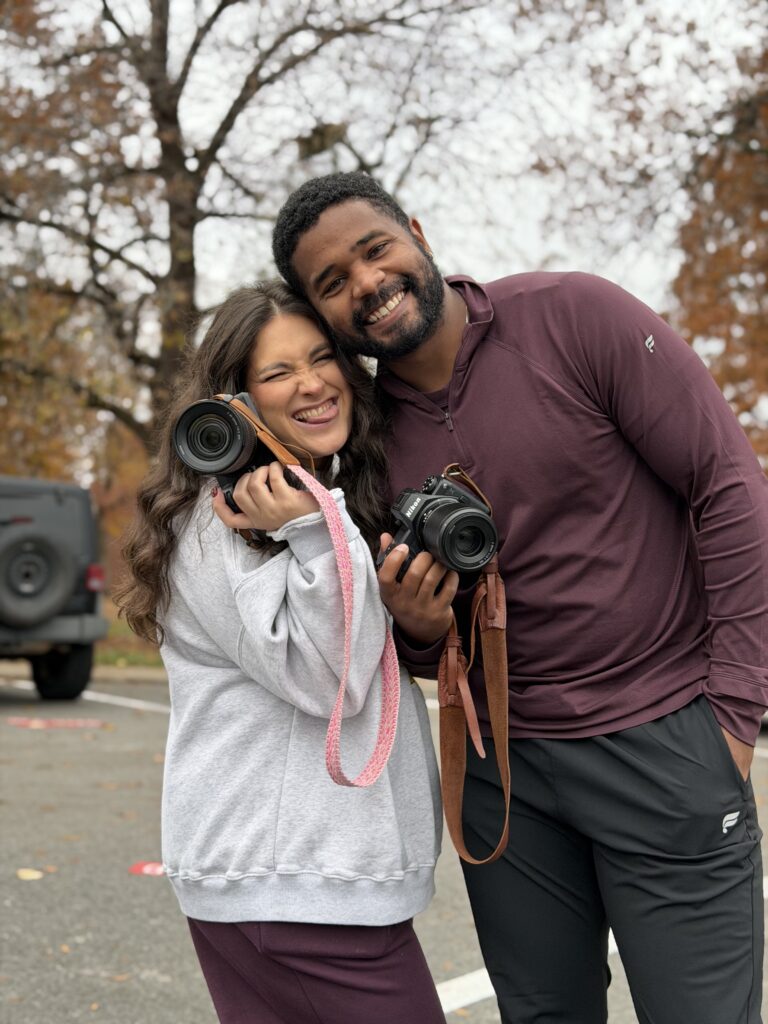
Over time, Kat and I upgraded our cameras, established systems, refined our style, built our brand and learned how to give clients a more dependable and sought-after experience. What’s the common thread? ALL of these things were built gradually (not overnight binge-watching YouTube videos). If I could go back in time and tell myself one thing, it would be: “You don’t need the business you will have in 7 years in order to serve your first client today.”
This is the distinction I hope to make as you read this blog and start your own entrepreneur journey:
You don’t need to build the photography business you imagine having five years from now. You need to build a business capable of serving the next person who decides to trust you.
Here’s FOUR things I genuinely believe you need to start your photography business TODAY.
1. Reliable Access to a Camera
Notice the choice of words: you need access, not necessarily ownership.
The first six months I spent learning photography were with the camera on my phone. I took pictures of everything. It was during that time that I had the brain-exploding realization that I was finally getting my money’s worth out of having the latest iPhone. 😂
Photographing my oldest daughter, who was only a few months old at the time, is where I really discovered my love for photographing people.
Here’s the FIRST photo I took of Ruthie and edited on my phone:

You don’t need to own the biggest and best camera or equipment to GET STARTED.
I spent my first few months learning with what I already had at my fingertips until I was able to borrow an actual camera from a family member.
Depending on the type of photography you plan to offer, you may be able to start with equipment you already own, borrow a camera from a friend or family member, or if neither of those are options, rent what you need for your sessions.
I won’t deny that owning everything yourself makes the business more convenient and dependable, but you don’t necessarily need to spend thousands of dollars on the fanciest, top of the line tools and equipment before you have photographed a single client.
The question to ask yourself isn’t:
“Do I own expensive, professional-looking equipment?”
It’s:
“Can I reliably use what I currently have to start creating today?”
All that to say, don’t let the fact that you can’t afford a new camera—or even borrow one from someone—keep you from getting started. Don’t let your circumstances delay your passion to create.
Take what you have at your fingertips and start learning composition, lighting, posing, and editing with whatever you have available, even if that means starting with just your phone.
For a long time, I edited my photos using the free Lightroom mobile app because I didn’t have a computer or the money to pay for Lightroom. It definitely wasn’t ideal, but it gave me a way to learn the basics of editing and become familiar with Lightroom before I was eventually able to buy a computer and start using the full program.
I knew my phone wasn’t going to be my forever setup, but it gave me somewhere to start.
You can start there too.
Sidenote for those ready to buy: If you’re looking to purchase your first camera, choose something dependable that fits comfortably within your budget.
You don’t need to understand every technical difference between every camera on the market. Take advantage of YouTube. There are hundreds of camera-review channels that can walk you through all the detailed specs and comparisons if you’re more of the camera junky type 😜
Your goal is simply to find a reliable camera that gives you room to learn, fits your budget, and works for the kind of photography you hope to create.
2. Enough Experience for Someone to Trust You
You don’t need to know everything before you start. You just need enough practice and experience.
Before someone is willing to pay you for your services, they need a reason to trust you. That’s where your portfolio comes in.
To build your portfolio and gain meaningful experience, start with thoughtfully planned sessions for friends, relatives, local couples, or families who understand that you’re still learning.
Offering a limited number of free sessions gives you room to practice, experiment, and improve without the pressure that comes with paid work. Use those sessions intentionally. Focus on specific skills, try new things, and pay attention to where you still need to grow.
The goal isn’t to work for free indefinitely. The goal is to gain experience, practice serving real people, and build confidence in the kind of work you eventually want to offer.
People tend to take things more seriously when money is involved, so be intentional about these free sessions. Use them to close the gaps in your knowledge, build confidence, and work toward the point where you feel ready to start charging for your work.
If you want to photograph families, plan sessions that resemble the family work you eventually want to sell. If you want to photograph couples, find couples willing to model for you. If you’re interested in weddings, consider assisting or shadowing an experienced photographer before taking responsibility for an entire wedding yourself.
A strong early portfolio should show more than your ability to create one beautiful photograph. It should show that you can create a consistent collection in a real session.
Once you can reliably create work you’re proud to show—and give people a positive experience while doing it—you can start transitioning from practice sessions into paid work.
You’ll know when it’s time and you’ll keep improving after you start charging. Every good photographer does.
The goal isn’t perfection or comparison. It’s being honest about your current ability and being a good steward of the trust someone gives you.

3. A Simple Way to Run the Work
Taking photographs is the fun part, but NOT the only part of running a photography business.
There’s also a lot happening behind the scenes to keep the client experience organized.
That includes things like:
- Responding to inquiries
- Sending pricing, contracts, and invoices
- Scheduling sessions and collecting important details
- Communicating what clients need to know before the session
- Keeping track of payments, deadlines, and follow-ups
- Managing reschedules or changes
- Keeping everything organized in one place
None of this is complicated on its own, but it can become difficult to manage quickly once you’re working with multiple clients at the same time.
This is the part of the business where having a simple, reliable system really matters. This was one of the first major expenses we had when we started our business and we would highly encourage you to bite the bullet and start putting that system in place as early as possible.
Communication
Keep inquiries, planning details, expectations, and important decisions somewhere you can easily find them.
In the very early stages of our business, managing everything manually became overwhelming. A lot of our important client information started getting scattered across texts, DMs, notes, and multiple inboxes. That’s why we started using HoneyBook.
HoneyBook gives us one place to manage the client experience from the initial inquiry through payment. We can send emails, proposals, contracts, invoices, questionnaires, and reminders without piecing together several different programs.
It also helps us keep every client experience consistent without relying on ourselves to remember every little detail.
When you’re balancing a business with work, family, and everyday life, having one place to see where every client stands is incredibly helpful. We started using HoneyBook within our first six months of photography and haven’t looked back.
If you’re ready to create a more organized and branded client experience, you can try HoneyBook and receive 50% off using our link.
Contracts and Payments
If you’re charging clients, use a written agreement that clearly explains what you’re providing, payment terms, cancellation or rescheduling policies, image usage, and delivery expectations.
And because it would be irresponsible not to say it: contract requirements vary depending on where you live and the kind of work you provide, so do your research and seek professional guidance when needed 😂
Editing and File Storage
Have a simple process for importing, organizing, editing, exporting, and backing up your photos.
We store our RAW and edited images on external hard drives, and storage fills up FAST. If you plan to keep RAW files, make sure you choose something with enough space to grow.
It also helps to use the same folder structure for every session and keep more than one copy of important files whenever possible.
Gallery Delivery
Give clients an easy, professional way to view and download their images.
A dedicated online gallery is much better than sending individual files through email or a generic file-transfer link.
We use CloudSpot in our own business and highly recommend it. It gives our clients one clean place to view, download, share, and order prints from their gallery.
You can also save 20% per month on your first year using our link.
4. A Way for People To Find You and Trust You
You don’t need a fully customized website before booking your first session.
You do need somewhere people can see your work, understand what you photograph, and know how to contact you.
In the beginning, that could be:
- A focused Instagram or Facebook page
- A link to your online portfolio or gallery
- Referrals from friends, family, and past clients
CloudSpot even gives you the ability to share galleries online, which can be a great place to start while you work toward eventually building a website.
Your presentation should be clear, but it doesn’t need to be elaborate.
It took us about two years to finally launch a website and several more to get it where it is today. Don’t stress if you’re still in the beginning stages.
Show the kind of work you want to be hired to create.
And remember: your first 5,000 photos probably aren’t going to be great.
Share your work anyway. There’s something powerful about learning publicly and overcoming those fears in sharing your work.
What Can Wait?
This is where new photographers spend money and energy too early. We know this from personal experience 🫣
None of these things are inherently bad. Some may eventually become valuable parts of your business. But they usually aren’t the reason you can or cannot serve your first client.
1. The “perfect” brand
You do not need months of logo revisions, an extensive color palette, or a complete brand strategy before photographing someone.
Choose something clean, communicate clearly, and allow the brand to develop as your work and perspective become more defined.
2. An elaborate website
Having a way to explain what you offer and giving people a way to contact you is more than enough to get started.
If you jump into website creation too early, you will quickly realize you don’t have the portfolio large enough to make the time and energy spent developing the site worthwhile. Let your social medias carry the heavy-lifting for now and as you grow your portfolio.
3. Every lens and accessory
It’s easy to believe one more purchase will make you feel ready. Sometimes new equipment solves a genuine limitation. Other times, it simply delays the uncomfortable step of putting your work in front of people. Not to mention, it leads to frustration when that expensive piece of equipment didn’t magically make your photos better.
Before buying something, ask:
“Will this help me serve my next client, or will it only help me feel more established?”
That question can save you a considerable amount of money (and frustration).
4. Too many subscriptions
Business tools can save time, but monthly expenses add up quickly.
Start with the tools required to get the work and manage it. Add new subscriptions when the time they save or the problem they solve clearly justifies the expense.
5. Business cards and printed marketing materials
Printed materials can be useful but they’re not a requirement. If your clients primarily discover you online or through personal referrals, business cards may not be where your limited startup money should go first. Plus, it doesn’t help when you go through multiple logo revisions and business names like we did!
6. An LLC (as “proof” that you’re legitimate)
Choosing the appropriate legal structure for your business matters, and you should understand the requirements where you live. But forming an LLC does not automatically create skill, clients, good service, or a profitable business. Nor should it be something you get as “proof” that you’re legit.
Handle the legal and financial responsibilities appropriate to your situation, but don’t confuse paperwork with progress.
We personally held off as long as possible on forming our LLC because we wanted to ensure we would keep doing business before doing all the necessary legwork in creating a new business entity.
Build Small and Serve People Well
If you already own a dependable camera and lens, your next step probably isn’t buying more gear. It may simply be photographing a few intentional portfolio sessions, creating a basic booking process, and letting people know what you offer.
If you don’t have the equipment you need yet, borrow or rent it while you practice and decide whether this is something you genuinely want to pursue.
And if your goal is wedding photography, give yourself more room to learn. Assist, second shoot, and gain experience before taking full responsibility for someone’s wedding day.
At the end of the day, the goal is pretty simple:
Serve people well.
Communicate clearly. Create the work you promised. Protect their images. Deliver when you said you would. Love people well throughout the process.
That matters far more than looking like an “established” photographer.
You don’t need to build the finished version of your business before you begin. Start with what your next client actually needs, and let the business grow alongside your experience.
Everything else can be added when you genuinely need it.
We hope this encourages you to stop waiting for everything to be perfect and start creating with what you have.
-SK


Be the first to comment